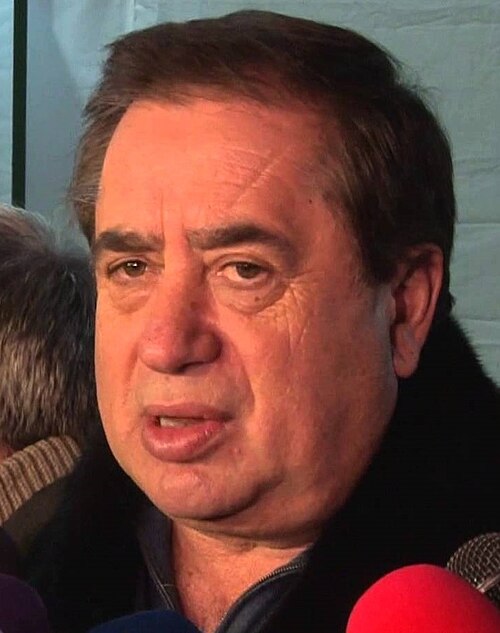
Ioan Niculae: The $700 Million Architect of Romanian Agriculture and Football
Ioan Niculae, a name synonymous with formidable enterprise in Romania, has carved out a significant legacy as a businessman whose influence spans across critical sectors, from the vast agricultural lands of his home country to the competitive arenas of professional football. Born on July 19, 1954, in the modest village of Buturugeni, Niculae’s journey is a testament to vision, strategic execution, and an unwavering commitment to scale. While his career has been marked by both monumental success and notable controversies, understanding the foundation of his wealth offers a compelling look into the dynamics of post-communist Romanian entrepreneurship. As of August 2018, his estimated
Ioan Niculae net worth stood impressively at $700 million, a figure that reflects his dominant position in the national economy.
This article delves into the various facets of Niculae's empire, exploring how he built his fortune primarily through InterAgro, Romania's leading agricultural and fertilizer conglomerate, and diversified into other significant ventures, including the ownership of the football club Astra Giurgiu. We will uncover the strategic moves that propelled him to such financial heights, the challenges he faced, and the lasting impact he has had on Romania’s economic landscape.
The Roots of an Agricultural Giant: From Buturugeni to InterAgro
Ioan Niculae's early life in rural Buturugeni undoubtedly shaped his future trajectory, imbuing him with an understanding of the land and its potential. Although details of his family life remain private, his upbringing in an agrarian setting provided an invaluable backdrop for his later ventures. His intellectual formation continued at the Ștefan Gheorghiu Academy, a prestigious institution known for nurturing Romania's political and economic elite during the communist era. This education likely provided him with a foundational understanding of large-scale economic planning and management, skills that would prove crucial in his entrepreneurial endeavors.
His career began at a state-owned agricultural company, where he gained practical, hands-on experience in the intricate workings of the industry. This period served as a critical apprenticeship, allowing him to observe the challenges and opportunities within Romania's vast agricultural sector. In 1995, capitalising on the post-communist economic transition, Niculae co-founded InterAgro. The timing was opportune, as Romania's economy was opening up, and there was immense potential for private investment in key sectors like agriculture and fertilizer production.
Under Niculae’s astute leadership, InterAgro rapidly expanded its operations, transforming into a cornerstone of Romania's agricultural landscape. The sheer scale of InterAgro is staggering: it manages approximately 50,000 hectares of agricultural land, making it one of the country's largest cereal cultivators. Beyond cultivation, the company developed significant storage capacities, boasting 700,000 tonnes in silos and an additional 450,000 tonnes in warehouses. This comprehensive approach – from cultivation to storage and fertilizer production – demonstrates a powerful vertical integration strategy that minimized reliance on external factors and maximized efficiency. This strategic foresight not only solidified InterAgro’s market position but also contributed significantly to Romania’s food security and economic stability. For a deeper dive into his agricultural ventures, explore
Ioan Niculae Net Worth: Unpacking Romania's InterAgro Empire.
Beyond the Fields: A Foray into Football and Diversification
While agriculture formed the bedrock of Ioan Niculae's wealth, his entrepreneurial spirit was not confined to the fields. In 1996, he made a notable move into the world of sports by acquiring the football club Astra Ploiești. This investment led to the club's relocation to Giurgiu and its renaming to Astra Giurgiu. Under Niculae's patronage, the club experienced a significant revitalization, achieving remarkable successes including winning the Romanian Cup and the Romanian Supercup. More importantly, Astra Giurgiu gained prominence in Romanian football, making its first appearances in European competitions.
The decision to invest in a football club, while seemingly distinct from agriculture, can be viewed through a strategic lens. Owning a high-profile sports team often brings significant public visibility, branding opportunities, and community engagement, all of which can indirectly support a businessman's broader interests. It also speaks to a personal passion, adding another dimension to his multifaceted career.
Niculae's diversification extended beyond sports into other key economic sectors. He made investments in the energy sector, notably a co-generation plant. This move was not just about generating revenue but also about achieving self-sufficiency and reducing operational costs for his other businesses by providing a reliable energy source. The plant also allowed for the resale of excess capacity, creating another income stream. Furthermore, his portfolio includes 170 hectares of vineyards, with the first harvest recorded in 2008, indicating an interest in high-value agricultural products beyond cereals. The ownership of a luxurious private plane also highlights his personal wealth and the operational demands of managing such a vast empire. These ventures showcase a savvy approach to diversifying assets and leveraging opportunities in a dynamic economic environment.
The Financial Landscape: Unpacking Ioan Niculae's Net Worth
The impressive
Ioan Niculae net worth, estimated at $700 million as of August 2018, primarily stems from his extensive holdings in InterAgro and his strategic investments across the agricultural and energy sectors. This wealth positions him among Romania's most affluent individuals, reflecting decades of strategic business decisions and successful enterprise management.
A crucial aspect of his financial success lies in his ability to identify and capitalize on market opportunities. For instance, the Forbes report highlights how Niculae benefited from the conflict in Ukraine by securing chemical contracts when traditional Ukrainian suppliers faced disruptions. This demonstrates a keen business acumen and adaptability, allowing InterAgro to fill critical supply gaps and expand its market reach during turbulent times.
Wealth generation on this scale in a transitioning economy like Romania requires not only a large initial capital but also sustained growth, efficient management, and a deep understanding of market dynamics. Niculae’s focus on foundational industries such as agriculture and energy proved prescient, as these sectors are vital for any country's development and are often resilient to economic fluctuations. His ability to scale InterAgro to become Romania's largest cereal cultivator and a major fertilizer producer created a self-sustaining ecosystem that consistently generated substantial revenue. Aspiring entrepreneurs can learn from Niculae's steadfast focus on core, high-demand industries and the strategic advantage of vertical integration in establishing market dominance.
Navigating Challenges: Legal Controversies and Public Image
Despite his significant business achievements and considerable
Ioan Niculae net worth, Niculae's career has not been without its complexities and challenges. He has faced several legal battles, including charges related to tax evasion and money laundering. These allegations have been closely scrutinised by state prosecutors, raising questions about the practices of some prominent businessmen in post-communist Romania. Specifically, he was charged with allegations that two Romanian politicians provided InterAgro with favorable discounts on gas transfers between 2006 and 2010. Such legal controversies, regardless of their outcome, inevitably cast a shadow on a public figure's reputation and can impact their legacy.
Beyond legal matters, Niculae has maintained a relatively private personal life. He was married to Domnița Niculae for 31 years before their divorce in 2013, and together they have three children. Details about his current relationship status are not publicly disclosed, aligning with his preference for privacy.
However, some aspects of his personal interests have drawn public attention. In 2014, he made headlines for a controversial hunting expedition to South Africa, where he hunted elephants, lions, wildebeest, and buffalo with the intention of taxidermying them and bringing them back to Romania. While legal within the confines of permitted hunting, such activities often spark debate regarding conservation and ethics, further impacting public perception. Information regarding Niculae’s philanthropic efforts is limited, suggesting a focus predominantly on his business ventures. To understand the full scope of these challenges, read
Ioan Niculae: Romania's Business Tycoon & Legal Controversies.
In conclusion, Ioan Niculae stands as a towering figure in Romanian business, whose journey from a rural upbringing to commanding a $700 million fortune encapsulates the dynamic and sometimes turbulent path of entrepreneurship in a transforming economy. His visionary leadership of InterAgro fundamentally reshaped Romania's agricultural sector, while his investment in Astra Giurgiu brought unprecedented success to Romanian football. Though his considerable
Ioan Niculae net worth is a testament to his commercial prowess, his legacy remains multifaceted, shaped by both significant economic contributions and the complexities of legal and public scrutiny. He remains a powerful symbol of ambition and influence in modern Romania.